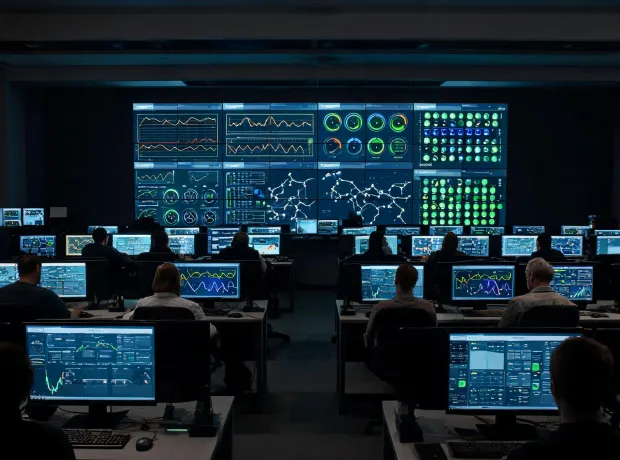
Control Rooms
Fine-pitch walls for high-density dashboards, alert monitoring and multi-source switching.

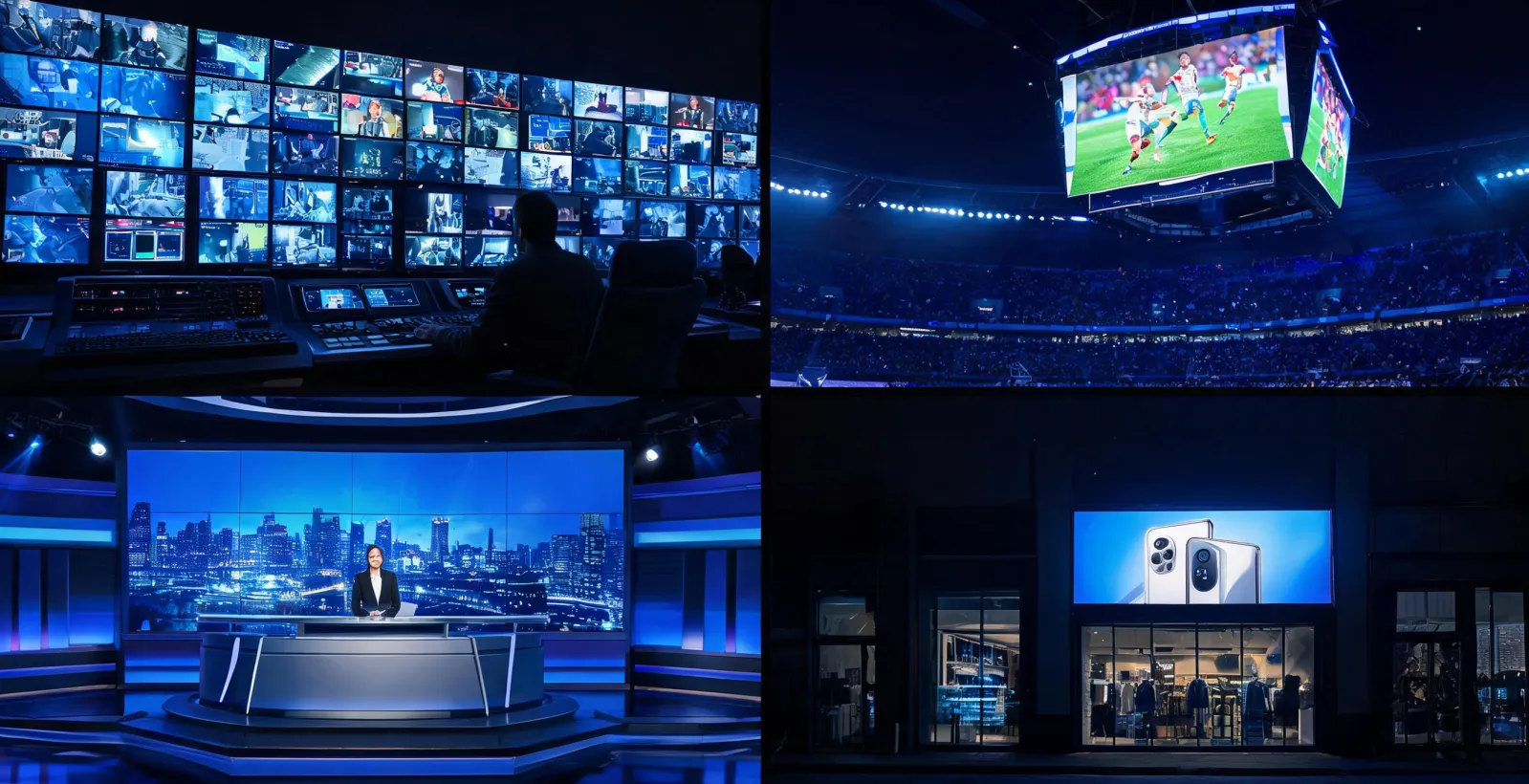
LED display projects differ by environment. A control room values fine detail and continuous operation, a sports venue needs brightness and audience impact, a broadcast studio requires camera-friendly color behavior, and a retail network demands content consistency across many locations. Planar keeps those differences visible throughout planning so each display category is connected to its working context instead of being reduced to a generic screen size.
Fine-pitch walls for high-density dashboards, alert monitoring and multi-source switching.
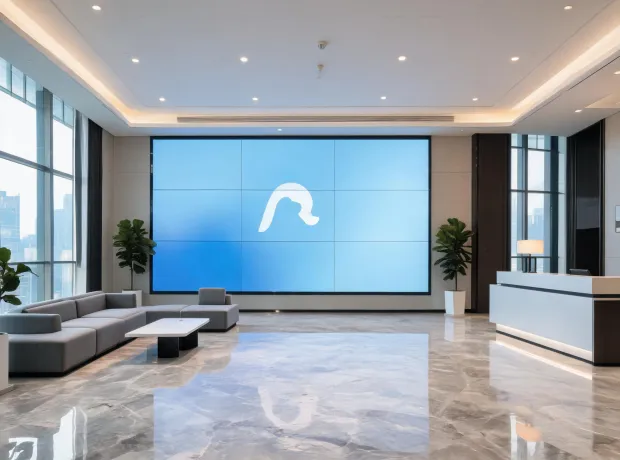
High-impact displays that welcome visitors while supporting presentations and brand campaigns.
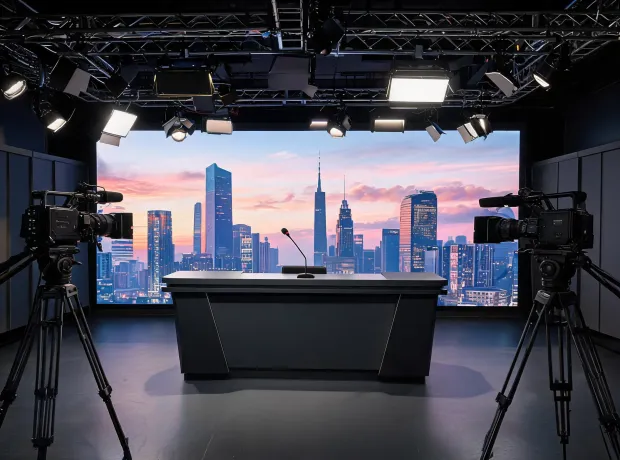
Camera-aware display surfaces for sets, virtual production support and visual storytelling.
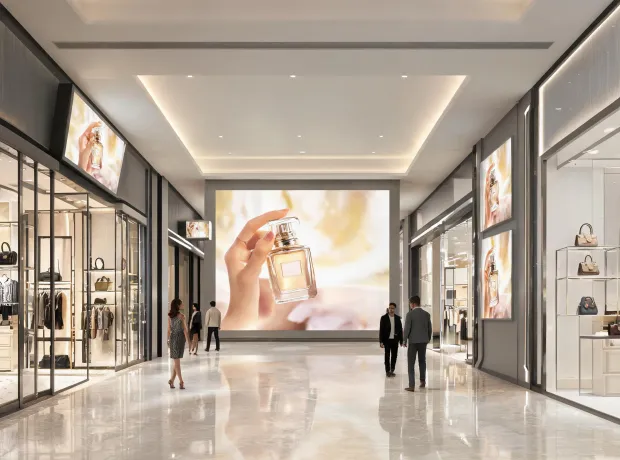
Digital signage and transparent LED for storefronts, flagship locations and media networks.
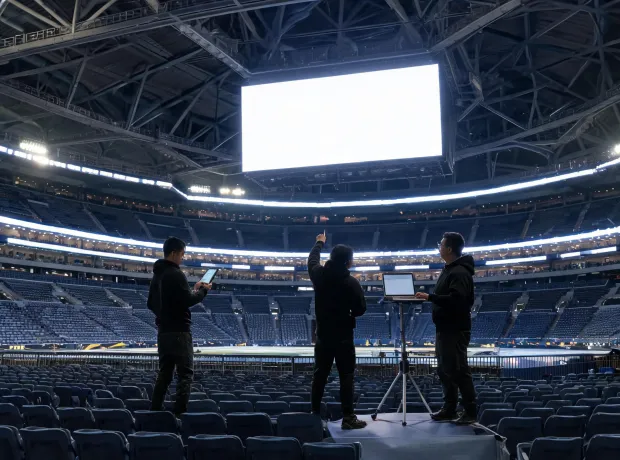
Large-format LED systems for scoreboards, ribbons, concourses and premium seating areas.
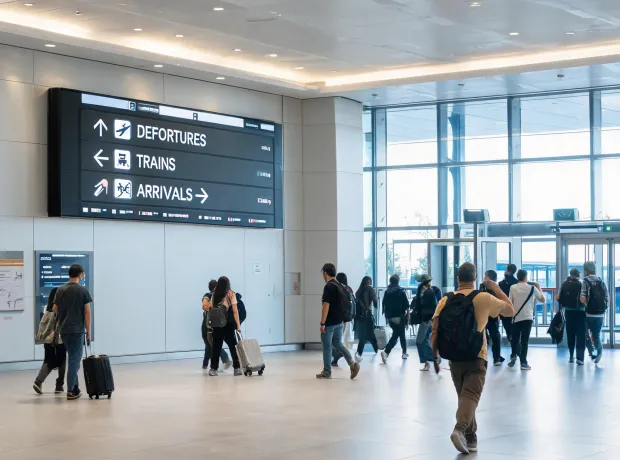
Clear information displays for terminals, control spaces and public-facing directional systems.
The same LED category can behave differently in two rooms. Ambient light changes brightness requirements, audience distance changes pitch selection, maintenance access changes cabinet choice, and the content workflow affects controller planning. Planar helps project teams compare those variables in a language that keeps owners, integrators and facilities staff aligned. This is especially useful when a room has multiple stakeholders, such as a lobby that hosts events, a control center that needs redundancy, or a retail network that must coordinate content across locations.
Most LED display disputes are not about which technology is "best" but about which compromise a specific room can live with. Planar keeps both sides of each decision on the table so owners choose deliberately rather than discovering the cost later.
| Decision | Option A | Option B | Where it bites |
|---|---|---|---|
| Pixel pitch for a control room | Fine pitch (0.9–1.5mm): readable text at 1.5–2m, higher cabinet count and cost | Coarser pitch (1.9–2.5mm): lower cost, but small dashboard fonts blur at close range | Pick fine pitch for desks against the wall; coarser pitch wastes resolution past 3m viewing |
| Transparent LED vs direct-view in a storefront | Transparent LED: keeps daylight and sightlines, typical 60–90% transparency, lower brightness behind glass | Direct-view wall: far brighter and higher resolution, but closes off the window and the view | Transparent wins on architecture, loses on legibility in direct sun; weigh footfall vs daylight |
| Front-service vs rear-service cabinets | Front-service: maintain modules from the audience side, ideal against walls, slightly thicker profile | Rear-service: thinner mount, but needs a service corridor behind the wall | A wall flush to structure with no rear access forces front-service regardless of preference |
An indoor pitch rated near 800 nits will wash out opposite a glass curtain wall in full sun. High-ambient lobbies and outdoor-facing windows need a higher brightness class or relocation, not just a larger screen.
Every pitch has a comfortable minimum distance; place viewers closer than roughly 1.5× the pitch in metres and the pixel structure becomes visible. A fine-pitch wall does not remove this limit, it only shortens it.
The open area that lets daylight through also reduces achievable brightness and pixel density. It is the right tool for architecture-led displays, not for dense data or text-heavy content.
A 24/7 control-room or transport wall is only as serviceable as its access plan. Without front-service clearance or a rear corridor, a single failed module can mean an extended dark patch.
Describe the venue, viewers, lighting conditions and content source. Planar can help frame the next technical conversation before hardware decisions become fixed.