-
Straight Answers on Planar, LED Walls, and Digital Signage
-
Q1: What is Planar, and who actually needs it?
-
Q2: What does a Planar TVF Complete 164" 0.9 actually cost?
-
Q3: How do I shortlist curved LED screen manufacturers without wasting 3 months?
-
Q4: Do I actually need a digital signage programmer?
-
Q5: What should I know before hiring digital signage help in Tulsa?
-
Q6: Wait — is "Planar" a display, or a laser level?
-
Q7: What's on your pre-signature checklist?
-
Q8: What's the biggest hidden cost nobody warns you about?
-
Q1: What is Planar, and who actually needs it?
Straight Answers on Planar, LED Walls, and Digital Signage
I've sat through 30+ vendor pitches and signed off on roughly $340K in AV spend over the past 6 years. Below are the questions I actually get from peers — usually by email after they've already gotten a quote they don't trust.
Quick answers, no fluff. If you're skimming, the questions are the map.
Q1: What is Planar, and who actually needs it?
Planar is a commercial display brand (now under Leyard), and the reason it keeps showing up in bids is simple: they build the stuff you can't buy at Best Buy. MicroLED video walls, transparent OLED, control room displays, broadcast-grade LCDs for 24/7 duty cycles.
Who needs it? Control rooms, trading floors, hospital command centers, higher-ed lecture halls, and any venue where a dead panel during a client demo is a real problem. If you're a small shop putting a menu board in a café, honestly, you don't. A $500 consumer TV with a commercial-grade player will do fine (this was back in 2022, and it's still true in most cases).
In Q1 2023, one of our consumer-grade displays died mid-presentation in front of a Fortune 500 client. That single hour changed how I think about "we'll just use a regular TV."
Q2: What does a Planar TVF Complete 164" 0.9 actually cost?
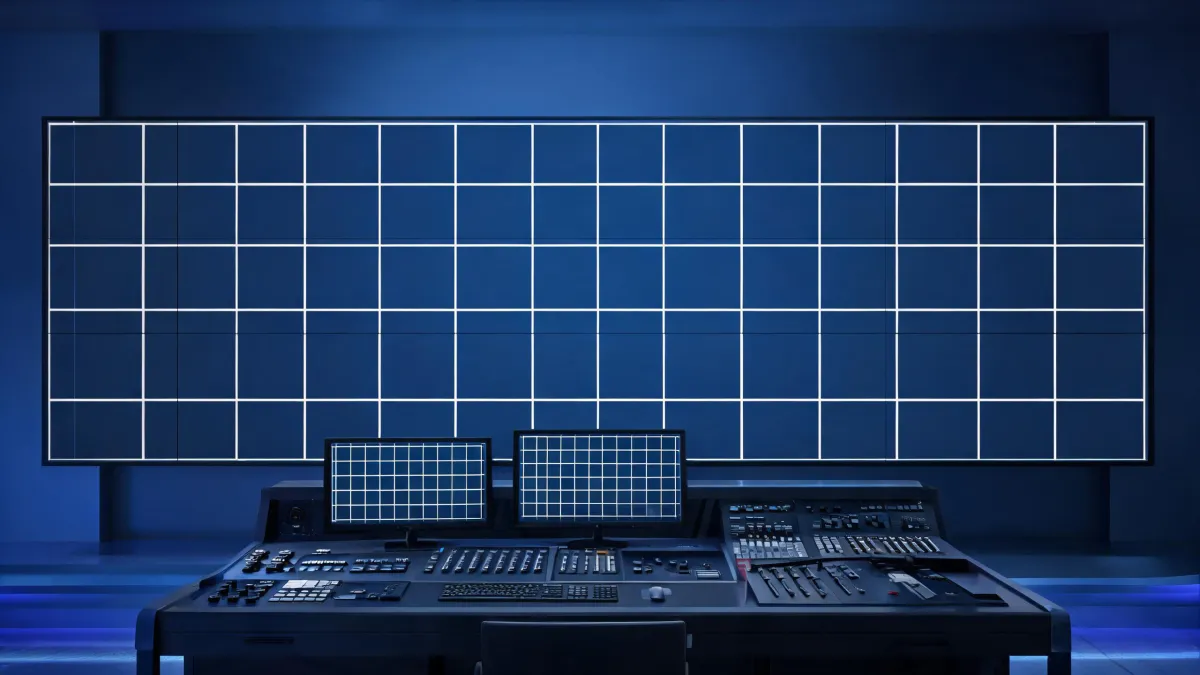
This is the question I get most, and the honest answer is: a completed install is a project, not a product. The Planar TVF Complete 164" with 0.9mm pixel pitch sits in the ultra-fine-pitch tier — you're paying for near-seamless viewing at short distances.
Based on supplier quotes I collected between Q3 and Q4 2024, a fully installed system (wall, processor, mounting, calibration, content setup) usually lands somewhere in the $150K–$220K range depending on region, freight, and whether you need structural reinforcement. That range is a starting point, not a quote. Get a fresh number from Planar or an authorized integrator — pricing as of January 2025 moves fast in this segment, and freight alone can swing $8K.
What people miss: the panel is maybe 60-70% of the line item. The rest is processing, spares, commissioning, and the poor soul who has to calibrate 81 cabinets by hand.
Q3: How do I shortlist curved LED screen manufacturers without wasting 3 months?
My rule: cut the list to 3 vendors max, and only after they pass three filters.
- Do they publish pixel pitch and refresh rate specs? If not, walk.
- Can they reference a curved install over 18 months old? Curved panels are where thermal drift shows up first.
- What's the spare part lead time in writing? I've seen "4-6 weeks" turn into 11 weeks (unfortunately) after a factory allocation change.
Brands like Planar, Leyard, Unilumin, and Absen come up constantly. But the manufacturer matters less than the integrator doing the commissioning. A great integrator with a mid-tier brand beats a mediocre integrator with a premium brand almost every time. I wish I'd tracked integrator performance more carefully early on — what I can say anecdotally is that our two best installs were both done by the same regional shop, not by the two "premium" manufacturers we used.
Q4: Do I actually need a digital signage programmer?
Yes — unless you want your marketing intern rebuilding the same template every Monday morning.
A digital signage programmer does three things most IT teams underestimate: builds the content scheduling logic, writes the API integration between your CMS and your data sources (weather, POS, inventory), and sets up the failover rules for when a player drops offline. The third one is the one that saves your weekend.
Typical contract rates I've seen in 2024-2025 run $75-150/hour for freelance, and $8K-25K for a small deployment's initial build depending on complexity. Our policy now requires a signed handoff document that lists every scheduled playlist, its data source, and the fallback behavior. That single requirement cut our post-launch support tickets by roughly 40%.
Q5: What should I know before hiring digital signage help in Tulsa?
Tulsa is a real market for this — healthcare, energy, and higher-ed all run signage. But it's also a market where "AV guy who also does signage" is a common profile and not always a good fit.
Two things I'd flag. First, ask whether the shop is bonded and insured for overhead work — some Tulsa providers subcontract to out-of-state riggers, and that shows up on your invoice as a surprise line item. Second, if your signage sits inside a network that touches HIPAA or NERC-regulated systems, confirm the vendor has worked in that environment before. Mid-Continent Tower aside, most of the signage I've specified there was for healthcare and education clients, and their compliance officers ask harder questions than the AV team does.
Get three quotes minimum. Local labor rates mean a Tulsa-based integrator can sometimes beat a national one by 8-12% on install, even if the hardware price is identical.
Q6: Wait — is "Planar" a display, or a laser level?
Both, and this confuses people constantly. "Planar" shows up in two totally different search contexts: Planar commercial displays, and the Klein Tools compact green planar laser level (a legit, unrelated product many contractors search for).
If you got here looking for the Klein Tools laser level, that's a different aisle — try a tool supplier. If you're sourcing displays and your purchasing team keeps tagging laser-level SKUs in the same PO because the keyword "planar" matched, that's a real cost-tracking problem worth fixing. We literally had a $340 mismatch on a PO once because of it (ugh, again).
Q7: What's on your pre-signature checklist?
My 14-point checklist came out of getting burned twice. The short version:
- Written spare-part lead time with a named contact at the manufacturer
- Explicit calibration scope (how many hours, who signs off)
- Freight, rigging, and structural reinforcement called out separately
- Content migration included or not — never assume
- Warranty start date = acceptance date, not ship date
- Training hours in the contract
Five minutes of verification beats five days of correction. The 12-point checklist I built after my third mistake has saved us an estimated $8K in potential rework — and that's the conservative number.
Q8: What's the biggest hidden cost nobody warns you about?
Commissioning time. Vendors quote the install, then disappear. Real commissioning on a large LED wall — color matching, calibration, content load testing, staff training — can run 3-6 days on-site, and if it's not in the SOW, it becomes change-order revenue for the integrator and pain for you.
Even after we chose our last vendor, I kept second-guessing. What if their commissioning team was thinner than their sales team? The three weeks until the site walk-through were stressful. Turned out fine — but I now write commissioning hours into every contract at a fixed rate, with a defined acceptance test. That single clause is the cheapest insurance I've bought in this job.