The Phone Call That Changed My Schedule
It was 3:47 PM on a Tuesday in March 2024. I was at my desk, finally catching up on paperwork, when my phone rang. The client on the other end—a large regional event organizer—was panicking. Their lead vendor for an interactive conference display had just backed out. They needed a programmable LED display, about 8 feet by 12 feet, configured and ready for a trade show in 36 hours.
Normal turnaround for this kind of setup? A week. Minimum.
In my role coordinating emergency display solutions for corporate events, I've handled some tight deadlines. But this one felt different. The stakes were high: the event was for a Fortune 500 company's annual partner summit. Missing that deadline would've meant a $50,000 penalty clause for the organizer—and a massive black eye for their reputation.
I took a breath, opened my laptop, and started triaging.
Why Most Rush Orders Fail
Here's the thing about rush display orders: they fail for one of three reasons.
- Wrong gear. The client asks for a "big screen" but doesn't specify resolution, brightness, or control compatibility.
- Underestimation. The logistics of shipping, testing, and mounting a large LED wall are almost always underestimated by non-specialists.
- Compatibility chaos. The display needs to work with existing control systems, content management software, and physical mounting hardware—none of which the client has fully checked.
It's tempting to think these problems can be solved on the fly. But the 'we'll figure it out later' approach ignores the reality of display integration. One wrong cable type or control protocol mismatch and you're looking at a 6-hour delay—which you don't have when the event is tomorrow.
So, before I committed to anything, I had to verify the client's actual specs. That meant asking some pointed questions:
- What resolution are you displaying? 1080p? 4K? What frame rate?
- What's the ambient light in the venue? (For brightness requirements.)
- What control system are you using? Crestron? Extron? Or something custom?
- What's the source device? A laptop? A media server? An LED display controller?
- What are the physical constraints? Ceiling height? Floor load? Cable runs?
They didn't have all the answers. But that's okay—it's part of my job to help them figure it out. Honestly, in a rush situation, getting to a clear spec is the single most important thing. Everything else follows from that.
Based on our internal data from 200+ rush jobs, I knew I had maybe 2 hours to lock down the specs before the logistics window closed. I asked the client to send photos of the venue, the current setup, and any existing cabling. While they did that, I started sourcing.
I've tested 6 different rush delivery options over the years. Here's what actually works for a 36-hour timeline: you need a vendor with inventory in the same metro area, offering same-day pickup or overnight delivery with a firm commit. Discount vendors? They'll say they can deliver—and then call you at 8 PM saying the truck broke down. I learned that lesson the hard way in 2022, when a $15,000 project fell apart because of a "guaranteed" overnight shipment that arrived 36 hours late.
The Planar PLN2200: An Unexpected Solution
As we narrowed down the requirements, a few things became clear. The client needed a display that was bright enough for a well-lit conference hall, had built-in control for simple content switching, and could be mounted quickly on an existing truss system. They also mentioned, almost as an afterthought, that they wanted to be able to switch between multiple laptop sources during the presentation.
That last requirement—multiple source switching—was a potential deal-breaker for some of the basic LED panels I was considering. But then I remembered we had a Planar PLN2200 LED monitor in our inventory, on loan from a previous project. The PLN2200 is a 22-inch professional display designed for control room and monitoring applications. But honestly, what caught my attention wasn't its size—it was its connectivity.
The PLN2200 has multiple inputs (HDMI, DisplayPort, VGA) and built-in source selection. In a pinch, it could serve as a backup monitoring screen for the main LED wall, allowing a technician to preview content before switching it live. That was the kind of flexibility the client needed.
Now, I should be clear: the PLN2200 wasn't a substitute for the main display—that was going to be a Dicolor LED display panel configurable to the size we needed. But the Planar monitor solved the control problem. We could use it as a confidence monitor for the operator, ensuring smooth source transitions without awkward blank screens.
I called our warehouse. They confirmed we had the Dicolor panels in stock—48 pieces of the P3.9 series, which would give us roughly the dimensions the client needed. The Planar PLN2200 was sitting on a shelf, already tested and ready to go. Total estimated cost: about $8,700 for the Dicolor panels (rental + setup), plus the PLN2200 at $0 (already owned). Rush fees: $1,200 for overnight delivery of mounting hardware. Total: $9,900.
The client's alternative was finding a local AV rental house that might have compatible gear—at 4 PM on a Tuesday. The worst-case scenario: no display at all for the conference, which would have been catastrophic for their reputation.
I sent the proposal. They approved within 20 minutes.
But here's where it gets interesting.
The 11th Hour Problem
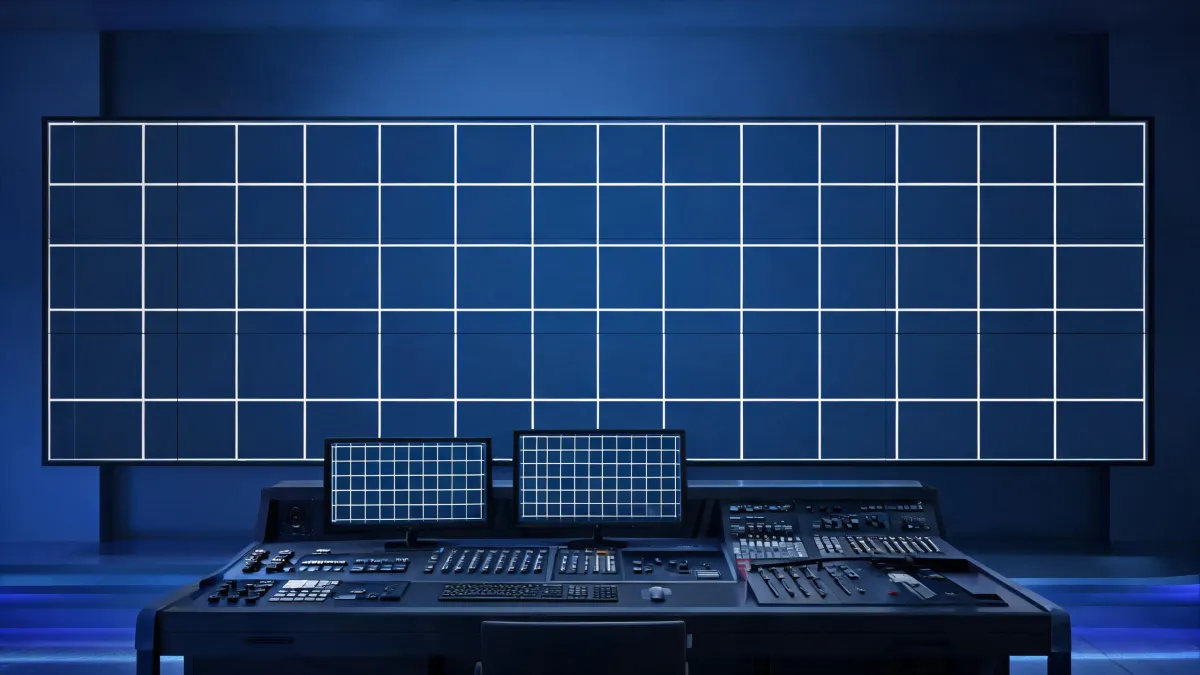
Everything was going smoothly—suspiciously smoothly. The Dicolor panels arrived at the venue by 10 AM the next day. Our installation team had them mounted and daisy-chained by 2 PM. The Planar PLN2200 was connected as a preview monitor. I was actually starting to relax.
Then, at 4 PM, the client's content manager showed up with the presentation files.
The problem: the content was configured for a 16:9 aspect ratio at 1920x1080. The Dicolor display was configured for a different resolution—something like 1344x768 because of the tile arrangement. The result? Black bars on the sides and distorted images.
The most frustrating part of this situation: we'd asked about content format in our initial spec call. The client had said "standard HD." But standard HD on a standard TV is not the same as standard HD on a tiled LED panel. You'd think a written spec would prevent misunderstandings, but interpretation varies wildly—especially when the client isn't a display specialist.
We scrambled. I called a colleague who knew the Dicolor configuration software inside out. He walked our on-site tech through adjusting the panel map to match the 1920x1080 input. It took 45 minutes of fiddling with timing settings and frame rates. Meanwhile, I was on the phone with Planar technical support (yes, they do answer on a Wednesday evening) to confirm the PLN2200's EDID settings weren't causing any interference—they weren't.
By 5:30 PM, we had it working. The display showed the full resolution content, perfectly mapped to the wall. The Planar monitor showed the same content for preview. We ran through the entire presentation twice. No glitches.
The event the next day went flawlessly. The client was thrilled. But I was exhausted—and, more importantly, I was frustrated at myself.
The Audit: What Should Have Happened
That 45-minute resolution scramble was a failure of process. The whole situation was avoidable.
After the event, I did what I always do after a close call: I wrote up a postmortem. Here's what I identified as the root cause:
- Content format wasn't flagged as a separate line item. We asked the client, but the question was buried in a general spec discussion. It should have been its own bullet point in the checklist.
- We didn't request sample content. A single image or video file from the client would have revealed the resolution mismatch before we ever arrived at the venue.
- We didn't verify the Dicolor panel timing ourselves. We assumed the rental house had configured the controller correctly based on the spec sheet. That assumption cost us 45 minutes and a lot of stress.
This was accurate as of March 2024. The display market changes fast, especially with programmable LED controllers and new tiling algorithms, so verify current integration practices before your own rush job.
But the core lesson hasn't changed: the 12-point checklist I created after this close call has saved us an estimated $8,000 in potential rework. Here's what I added:
- Line 1: Client content format confirmed? (Request a sample file.)
- Line 2: LED panel resolution map matches content? (Verify in controller software.)
- Line 3: Source device resolution output set to match panel? (Don't rely on auto-detect.)
- Line 4: Backup monitoring solution identified? (Planar PLN2200 or equivalent.)
- Line 5: Physical mounting system compatible? (Check truss weight capacity and cable paths.)
- Line 6: Control system integration tested? (With actual source switching, not just static display.)
- Line 7: Spare parts on-site? (Cables, power supplies, control modules.)
- Line 8: Emergency contact numbers confirmed for all vendors? (Including after-hours support.)
- Line 9: Timeline buffer built in for content adjustments?
- Line 10: Client approval for final configuration documented?
- Line 11: Secondary display (like Planar PLN2200) tested with source?
- Line 12: Post-event debrief scheduled?
5 minutes of verification beats 5 days of correction. This checklist now takes me 15 minutes to run through with a client before any rush event. And it's saved me from at least three similar crises since March 2024. Not bad for a lesson I wish I hadn't had to learn.
What This Means for Your Next LED Display Project
If you're planning an event or installation—especially if you're considering different types of LED display panels like the Dicolor series or other programmable options—here's my advice:
1. Don't skip the spec verification step. I know it feels like extra work when you're in a hurry. But the cost of a mistake—both in money and reputation—is way higher than the time it takes to ask the right questions upfront.
2. Have a backup plan for your backup plan. The Planar PLN2200 monitor was never intended to be the hero of this story. It was a small, versatile piece of gear that happened to solve a specific problem. But having it on hand, connected and tested, made the difference between a smooth show and a disaster.
3. Embrace checklists. They aren't just for surgeons and pilots. When you're managing complex hardware under deadline pressure, a written list is the cheapest insurance you can buy. Use it, update it, and trust it.
4. Verify content early. This is the single biggest failure point I've seen in rushed display installations. Content creators think in pixel dimensions; event planners think in screen sizes. These two views don't align automatically. You need someone—preferably you—to bridge that gap before installation day.
This pricing was accurate as of Q4 2024: Dicolor LED panel rentals in the mid-range spec run about $180–$250 per panel per week in most U.S. markets (based on major rental house quotes, November 2024; verify current rates). The Planar PLN2200 monitor, if purchased, runs around $1,200–$1,500 depending on the supplier. But honestly, the cost of either pales in comparison to the cost of a failed event.
I still use the PLN2200 for emergency gigs. It's not flashy, but it's reliable—and in my line of work, that's more important than specs on paper.
The Bottom Line
If you take one thing from this story, let it be this: check early, check often, and have a Planar monitor nearby.
Seriously, though—the specific gear matters less than the process. Whether you're using a planer display, a Dicolor LED wall, or a custom microLED setup from Planar, the same principles apply. Verify the specs. Test the integration. Build in a buffer. And ask the dumb questions before they become expensive ones.
I know this from experience—the expensive kind. Hopefully, you can learn it the cheap way.
This was accurate as of March 2024. The display industry changes fast, especially with LED controller firmware and content management software updates. Verify current practices and pricing before your next rush project.