No Two Rush Orders Are the Same
I've been coordinating emergency display installations for over six years now – everything from last-minute tradeshow booths to control room retrofits that had to be live by Monday morning. If there's one thing I've learned, it's that the “best” LED video wall solution depends entirely on your specific constraints.
People assume the biggest challenge is always the budget. It's not. Sometimes it's the installation window. Sometimes it's the viewing angle requirement. Sometimes it's the fact that the client's ceiling can't support a 200kg panel. So I'm going to walk you through three common scenarios I see with Planar products, and help you figure out which one you're in.
Heads up: Pricing and availability mentioned here are accurate as of Q1 2025. The display market changes fast, so always verify current specs and lead times with your supplier before committing.
Scenario A: The “Sink or Swim” 48-Hour Event
You just lost your original display vendor – or the client added a screen two days before launch. Normal lead times for a custom LED video wall are 5–7 business days. You don't have that luxury.
What I've seen work
In March 2024, a client called me at 3 PM needing a 3×2 microLED wall for a product unveiling the next afternoon. Normal tech for that size? We would've gone with a Planar Luxe MicroLED or a direct-view COB panel. But those require custom framing and careful calibration – not happening in 24 hours. Instead, we sourced a pre-configured LCD video wall kit from our local distributor. The pixel pitch was coarser, but the color accuracy was still solid, and it came with a floor stand that didn't need wall mounting. Paid about $1,200 in rush fees (on top of the $4,800 base) – but we saved the event.
Key takeaway for urgent events: Don't fight for the perfect pixel pitch. Go with what's available and deliverable. Pre-configured LCD video walls, rental stock, or even a single large-format display can be a lifesaver. Planar's own LCD monitor lineup (e.g., the Planar EP series) is often in stock at major rental houses.
Scenario B: Permanent Install with a 3-Week Deadline
You have a few weeks, but not the standard 6–8 weeks for a custom installation. Maybe it's a corporate lobby that needs a bold first impression, or a digital signage network for a retail chain opening next month.
Why this is different from Scenario A
With three weeks, you can consider a true LED video wall. But you still have to be smart about configuration. From my experience, the biggest time sink isn't the panel delivery – it's the steel framework and on-site calibration. So I recommend:
- Stick with a standard panel size (500×500mm or 600×337.5mm) that your integrator has in inventory, not a custom pitch.
- Use a Planar DirectLight LED series – they're designed for fast installation with integrated mounting brackets and pre-calibrated color uniformity.
- Accept a slightly lower pixel pitch if it means shorter lead time. 1.5mm vs 1.2mm? In most corporate lobby scenarios, nobody notices the difference.
I remember a retail project in 2023 where we had to install 16 transparent OLED displays across a storefront. The client originally spec'd a custom size – big mistake. We persuaded them to go with Planar LookThru 55″ units (standard size) and saved three weeks of fabrication time. The store opened on schedule.
Scenario C: Mission-Critical Control Room (No Compromise on Quality)
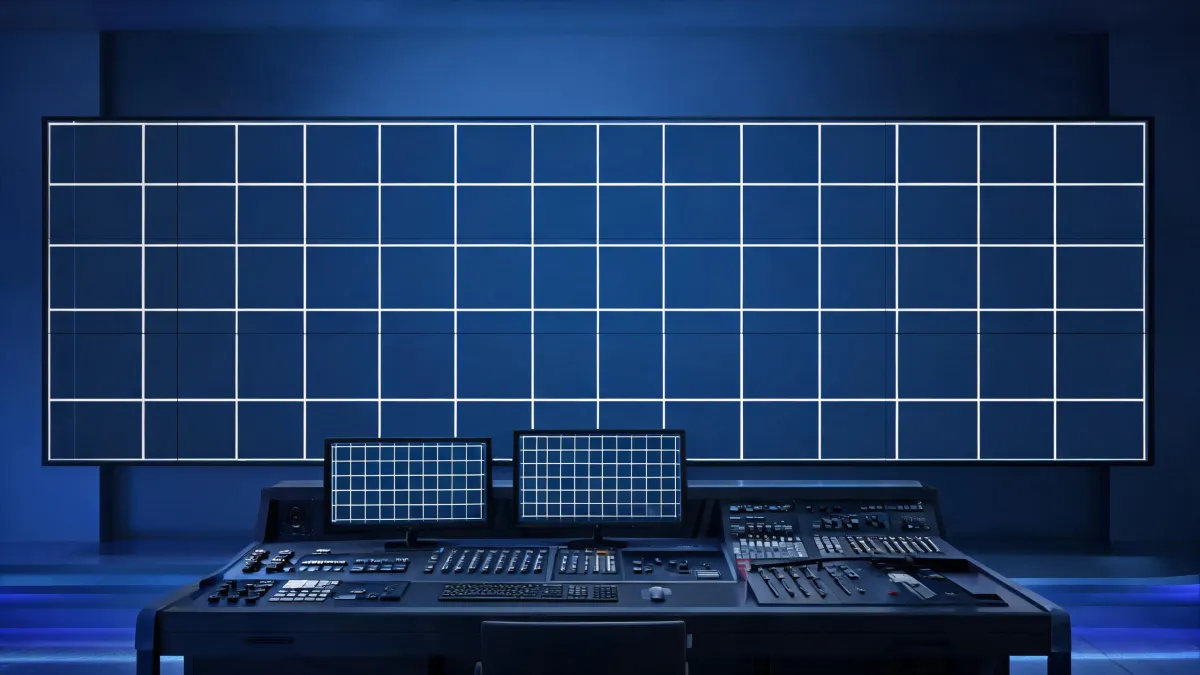
This is where you can't cut corners – think 24/7 operations, emergency dispatch, or network operations centers. These clients need true color accuracy, minimal bezels, and absolute reliability. And they usually have a longer timeline (4–6 weeks) because the room construction itself takes time.
My approach here is completely different
I've never fully understood why some vendors try to rush a control room installation. Honestly, if you're putting a video wall that'll run 24/7 for the next 5–7 years, a week of extra commissioning is a rounding error. So I'd argue: don't rush. Use Planar's professional-grade products like the Planar Clarity Margay LCD video wall series, or the Planar UltraRes microLED if budget allows. These come with built-in redundancy (dual power supplies, failover signal paths) and advanced calibration.
The irony: Trying to save time in a control room project often backfires. I once saw a team skip the burn-in test to meet a deadline – two months later they had to replace four panels because of color drift. That cost more in downtime than the original test would have.
How to Tell Which Scenario You're In
Still unsure? Ask yourself these three questions:
- How many days until go-live? Under 3 days → Scenario A. 3–20 days → Scenario B. Over 20 days → Scenario C (or you have time to evaluate).
- Can the client accept a temporary solution that's swapped later? Yes → consider a rental or quick LCD kit. No → you're in Scenario B or C.
- Is this for a safety- or revenue-critical environment? Yes → Scenario C, period. Don't cut corners.
One last thing: people sometimes assume the cheapest quote means the vendor is more efficient. What they don't see is which costs are being hidden – like rush shipping that's not included, or calibration that'll be billed separately. I've learned the hard way that a slightly higher upfront cost with a transparent vendor is almost always cheaper in the long run. Trust me on this one.
If you're planning a display project and feeling the time pressure, drop me a line – or better yet, talk to a certified Planar integrator. They'll help you pick the right scenario-fit without the guesswork.