In August 2024, I had three weeks to source a LED video wall for our company's expo booth. If you've ever been the person responsible for event technology with a deadline that tight, you know the exact flavor of dread I'm talking about.
I'm the office administrator for a mid-sized fintech company — about 200 people across three locations. I manage all the purchasing nobody else wants to own, from office supplies to vendor contracts, roughly $300,000 a year across 25 or so vendors. I report to both operations and finance, which basically means I get to be the bad guy twice for every decision. And in late summer, I got the kind of request that makes other admins run for cover: our marketing director wanted a professional LED display wall for the FinTech Expo in September, plus two digital signage screens for product demos, with everything installed and running a week before the show.
Let me be honest with you: I'd kind of never sourced anything like this before. Lightbulbs and catering? Yes. A 3-meter LED wall with a six-figure spec sheet? Absolutely not.
The Setup: A Booth, a Deadline, and a Stack of Quotes
I started the way everyone starts: I Googled it. I spent an entire evening searching for "electronics LED display" options and ended up more confused than when I began. Then I made the mistake of searching for "Planar" — because I'd heard they make solid professional displays — and my top results were for the Rega Planar 1 turntable price. A turntable. Someone on our team also asked whether I'd looked into "non planar 3D printing slicer" settings, because they thought I was 3D-printing booth props. The office group chat turned this into a two-week running joke: "How's the turntable research coming along?"
Eventually, I got serious. I reached out to three AV integrators with the same brief: a LED video wall roughly 3m x 2m, two 55-inch digital signage displays, full installation, and a hard requirement that everything work by September 10. Here's what came back:
- Vendor A: $9,500, delivery "estimated" at 10–14 days after order. No firm date.
- Vendor B: $12,000, with a "likely" delivery window they couldn't 100% guarantee due to "global component availability."
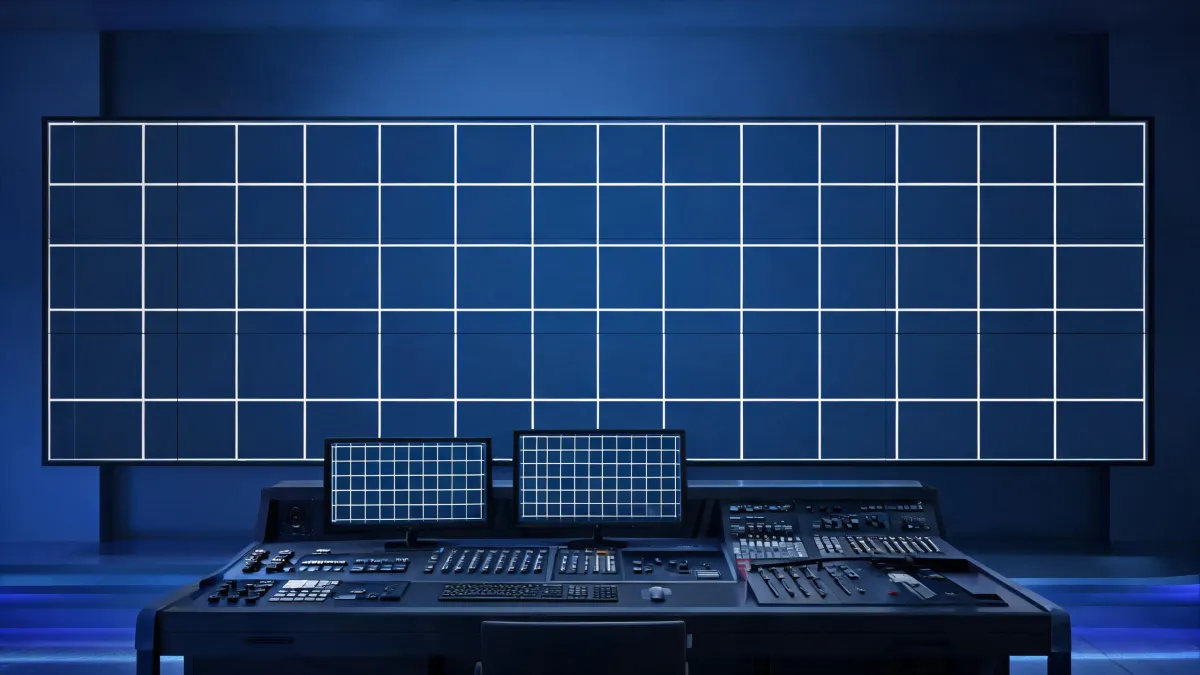
- Vendor C: $14,800 for a Planar LED video wall through a local integrator, with a guaranteed install date of September 10, a week before the expo.
My eyes went straight to the $9,500 quote. Of course they did. The difference between $9,500 and $14,800 is $5,300 — and when you report to finance, every dollar you save is a dollar that goes back to the budget. The cheaper quote looked like the same spec on paper. Same resolution, similar brightness, same footprint. Why wouldn't I save the company five grand?
The Temptation: Saving Money vs. Sleeping at Night
Here's something vendors won't tell you: "estimated delivery" is not a promise. It usually includes buffer time that vendors build in to manage their production queue — which means it's not how long your order takes; it's how long it takes when everything goes according to their plan, and you're not the priority. The first quote is rarely the final cost of the relationship, either. Once you're in, add-ons and expediting fees have a way of appearing.
I almost went with Vendor A. I really did. My budget brain was doing mental gymnastics: "The event is still weeks away. Even if it's a few days late, we'll make it work. It's just a screen, right?"
And then I remembered 2022.
In my first year as an admin buyer, I made the classic rookie mistake. I ordered 200 custom-branded power banks for a client event, and I chose the cheaper vendor because they were "pretty reliable" and "should" deliver on time. They didn't. The shipment arrived four days after the event. I spent the next month explaining to my VP why we had 200 useless power banks in the storage room and zero client swag at the event we'd actually spent money flying people to.
Saved $600. Cost me a lot more than that in credibility.
People think expensive vendors deliver better quality — that the causal arrow points from price to quality. Actually, it runs the other way. Vendors who consistently deliver both quality and timelines charge more because reliability has a real cost. They've invested in supply chain, in quality control, in project management. When you pay for a Planar display through a qualified integrator, you're not paying for the pixels. You're paying for the certainty that those pixels will be glowing on the morning of September 10.
The Decision: What "Expensive" Actually Costs
Here's the math that changed my mind. Let me walk you through it, because it applies to any LED screen for events price quote, not just ours.
Scenario A: I take the $9,500 quote and it arrives on time. Great — I saved $5,300. The event goes well, finance is happy, I look efficient. This is the best-case outcome.
Scenario B: I take the $9,500 quote and it doesn't arrive on time. Now our expo booth is a folding table with a laptop and a roll-up banner, surrounded by competitors with flashy video walls. The marketing director — who spent months on this event — is furious. The VP asks why I didn't secure this properly. And the cost of the failure isn't the $9,500; it's the missed lead-gen, the damaged team morale, and my reputation. That's worth infinitely more than $5,300.
This is what I mean by time certainty: people think a rush order or a premium quote is just about paying for speed. It's not. It's about buying a guarantee — removing the risk that the whole event falls apart because of one "probably fine" delivery.
In our case, the $5,300 premium was essentially an insurance policy. A 15% chance of failure with Vendor A meant an expected loss of tens of thousands of dollars against a possible saving of $5,300. Once I wrote that out on paper — literally, on a whiteboard in my home office — the decision was obvious.
Looking back, I should have arrived at this conclusion without the 2022 disaster. But if I could redo that first-order mistake, I'd invest in a vendor with a stated delivery commitment instead of a hopeful "probably." At the time, the cheap choice felt responsible. It wasn't. It was just cheap.
So I chose the Planar wall. I approved the purchase order at $14,800, and I'll be honest — the moment I hit "submit," a small voice started second-guessing me. What if the integrator was padding the quote? What if I could have negotiated Vendor B down to $10,000? The two weeks between approval and installation were quietly stressful. I didn't fully relax until I got the confirmation email with the install date locked in.
The Result: What Guaranteed Delivery Actually Bought
September 10, 8 a.m. The Planar LED wall arrived on a truck at 7:50. Two technicians from the integrator had it assembled by 9:30, and they spent the next hour on calibration. I hovered nearby, pretending to check emails, actually watching them work.
That's when I learned something I didn't expect: color calibration on a professional LED wall is a bigger deal than most first-time buyers realize. The marketing team's brand blue — Pantone 286 C, if you're curious — is a lot harder to reproduce on a giant LED panel than on a laptop screen. Industry-standard color tolerance is Delta E < 2 for brand-critical colors; Delta E of 2–4 is noticeable to trained observers, and anything above 4 is visible to most people. The integrator had a calibration routine for exactly this, and they ran it before they'd even let our marketing director look at the wall. You don't get that from a "we'll ship it and you're on your own" quote.
By 11 a.m., the wall was running: crisp video loops, accurate colors, absolutely no visible issues. The two 55-inch digital signage displays were mounted on the booth walls and cycling through product demos. I stood in the empty expo hall for a few minutes and let myself feel relieved.
The event itself went smoothly. Our booth drew a steady crowd, the sales team had the visual anchor they needed, and the expo digital signage did its job — no glitches, no dead pixels, no overheating, no drama. Nobody asked about the turntable. Nobody mentioned the 3D printing slicer. (The office joke has persisted, though. I expect it to follow me to retirement.)
The Reckoning: What I'd Tell Another Admin Buyer
If you're in a similar position — sourcing a LED screen for an event, or any mission-critical equipment with a hard deadline — here's my honest advice, written from three years and one very expensive lesson in the trenches:
- Get the delivery commitment in writing. "Estimated" is not a date. "Should arrive by" is not a date. Ask for a guaranteed install date, and if the vendor won't commit in writing, you have your answer.
- Do the expected-cost math. Take the probability of failure and multiply it by the cost of failure. You'll find that the "expensive" option is frequently the cheapest option with the risk factored in.
- Ask about calibration and support. A great LED wall is more than panels and pixels. Color accuracy — Delta E, if you want to sound smart in a meeting — can make your brand look premium or like a knockoff. That's worth asking your integrator about.
- When the deadline is real, pay for certainty. Not speed, not prestige. Certainty. That's what you're actually buying.
I'm not saying you should always pick the highest bid. I'm saying that in a time-constrained situation, the price of certainty is worth paying. You're not buying "a screen." You're buying "the screen will be there, on time, working." Those are two very different purchases, and they have two very different prices.
The $9,500 vendor might have worked out. Maybe. But "maybe" is a dangerous word when the venue is booked, the flights are paid, and your entire company's marketing plan is riding on a panel wall glowing in the corner of a convention hall.
If you're mid-search for a professional display and the deadline is tight, trust me on this one: pay for certainty. Your future self — the one standing in an empty expo hall at 8:47 a.m. watching the screens light up exactly on schedule — will thank you.
And hey, at least your search history won't be full of turntable prices.